

Biothane vs Hexa Dog Leash: Choosing the Right Material for Your Dog
Choosing the right dog leash material can make a big difference in durability, comfort and everyday usability. Two of the most popular modern leash materials are Biothane and Hexa coated webbing. Both are waterproof, durable and easy to clean, making them excellent alternatives to traditional nylon or leather dog leashes. But which one is better for your dog? In this guide, we compare Biothane vs Hexa dog leashes so you can choose the best option for your walks, training sessions and outdoor adventures.
DOG LEASH
3/14/20262 min read
Introduction
Choosing the right dog leash material is essential for ensuring your dog's comfort and safety during walks. Among the array of materials available, biothane and hexa-coated webbing have emerged as popular alternatives to traditional nylon or leather. Understanding the differences between these two materials will help you make an informed decision for your dog’s needs.
Durability and Maintenance
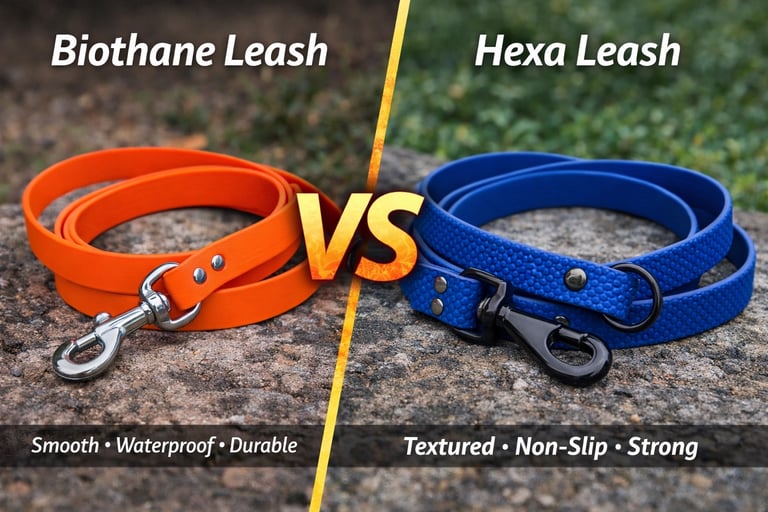
Both biothane and hexa-coated leashes are renowned for their durability. Biothane, made of a polyester webbing coated with thermoplastic polyurethane (TPU), is resistant to wear and tear. It is particularly effective in resisting conditions that would typically damage fabric leashes, such as excessive moisture and dirt. On the other hand, hexa-coated webbing also boasts impressive longevity, leveraging a special coating that protects against abrasions and water.
When it comes to maintenance, both materials are easy to clean. Simply wipe down the leash with a damp cloth or rinse it with water after use. This ease of cleaning ensures that your leash remains in good condition, preventing odors and build-up of dirt that can accumulate over time.
Comfort and Usability
In terms of comfort, biothane leashes are particularly popular because they provide a soft yet sturdy feel in hand, which is essential during prolonged use. They are designed to avoid chafing and discomfort, making them an excellent choice for long walks or training sessions. The flexibility of biothane also allows for smooth adjustments without compromising on strength.
Conversely, hexa leashes are designed with a focus on usability, featuring a lightweight build that adds minimal burden while walking your dog. Additionally, the unique hexagonal structure of the hexa webbing offers an extra layer of grip and prevents slipping, which can be important for energetic dogs who might pull.
Waterproof Properties
One of the greatest advantages of both biothane and hexa dog leashes is their waterproof properties. Unlike traditional leashes that absorb water and may become heavy, both options are impervious to moisture. As a dog owner, this means you can confidently use these leashes in various weather conditions, ensuring your dog’s training or playtime is never interrupted by rain or water. This makes both materials ideal for outdoor adventures, from hiking to beach trips.
Conclusion
Ultimately, the choice between biothane and hexa dog leashes will depend on your specific needs and preferences. If you prioritize a leash that feels comfortable and offers high durability, biothane may be the ideal option for you. However, if you value lightweight usability with added grip, you might lean toward a hexa-coated leash. Either way, both materials provide excellent alternatives to traditional leashes, ensuring your dog stays secure and comfortable during every outing.
QUICK LINKS




© 2026 Luido Pet Gear. Sva prava pridržana.
CATEGORIES
Dedicated to creating quality, safe and modern equipment for your favorite four-legged friends.

CONTACT